
[BLOG] 수막새와 집. Roof tiles & homes.
- Jina Nam
- Feb 18, 2024
- 6 min read




수막새와 집
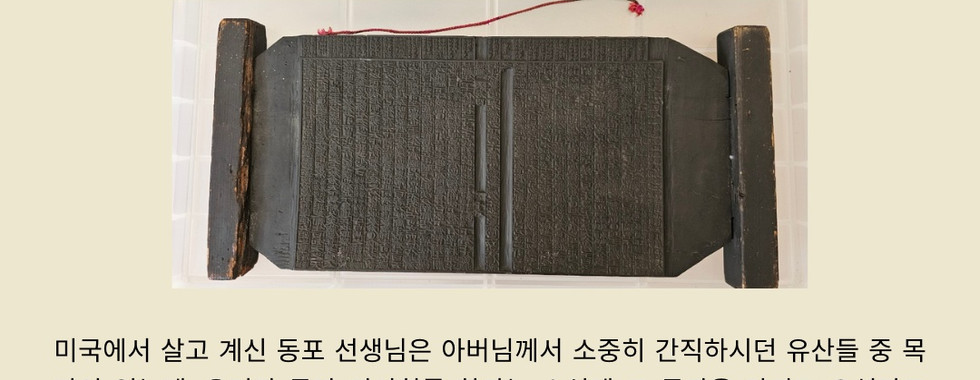
2023년 나는 미국과 일본에 흩어져 있는 우리 기록문화유산 목판 12점을 찾았다. 재밌는건 똑같은 시리즈의 목판 두점이, 하나는 일본에서 다른 하나는 미국에서 발견 되었었다. 미국에서 다양한 경로로 찾게된 목판들은 한국으로 환수해오기 전에 현지에 계시는 동포분들과도 나누고 싶어 전시를 진행했다. 9월 전시 오프닝날 찾아와주신 분들 가운데 한 분이 계셨다. 야구모자를 쓰시고 셔츠에 바지를 입으시고, 손에는 수건으로 둘러싸인 무언가를 들고 계셨다.
미국에서 살고 계신 동포 선생님은 아버님께서 소중히 간직하시던 유산들 중 목판이 있는데, 우리가 목판 전시회를 한다는 소식에 그 목판을 가지고 오셨다고 말씀하셨다. 아버님께서는 평생 한국 역사문화를 사랑하시던 분으로써 유물과 기록물들을 소장하고 계셨는데, 북한에서 남한으로, 그리고 미국으로 이민 오실때도 항상 그 많은 소장품들을 챙기셨다고 하셨다. 자녀분들 중에서는 현재 선생님께서만 살아계시고, 선생님의 아들따님 그리고 손녀따님들은 유산에 큰 관심이 없어 어떻게 해야할지 고민하고 계셨다고 속마음을 알려주셨다.
재단에서 활동하면서 흔히 들은 이야기이다. 한국이든 외국이든, 역사와 문화유산은 계승이 필요한데 계승이 문제다. 특히 외국에서는 동포분들 중 모국에 대한 그리움과 자부심을 유산수집을 통해 달래시는데, 다음 세대로 제대로 못 넘겨저가 가슴 아프게도 유산은 버려지거나 잃어버려진다. 한 사례로는 미국뉴욕 지부장님이 한번은 길을 가시는데 길바닥에 한국 그림 한점이 다른 짐과 함께버려진 것을 목격하셨다. 그림에는 한자로 글이 쓰여져 돌아가신 아버님 유물을 정리하며 중국 그림인줄 알고 버렸다고 한인2세 분이 말씀해주셨다.
선생님께서도 아버님의 유산도 그리될까 걱졍하셨는데 우리 재단을 통해 환수를 포함한 충분한 가치활용이 될수 있도록 목판을 직접들고 찾아와주신거였다.
그래서 12월달에 우리는 전문가분과 함께 다시 미국으로가서 조사를 시작했다. 사진만 찍는데도 일주일이 부족했다. 허리가 휘어지고 새벽 12시가 넘도록 수집품을 하나하나 촬영하고 기록하고 정리했다. 우리는 일주일동안 그 유산들과 함께하며 감탄했디만, 처음에 수집하셨던 선생님은 평생을 함께하시면서 어떤 마음이셨을까?
조사를 마치고 유산 일부는 우리와 함께 다시 한국으로 돌아왔다. 그 중 고구려 수막새 1점이 있었다. 유산을 소중히 가지고 계셨던 선생님과 가족분들의 마음을 담고, 계승의 문제도 위안하듯이 한 초등학생 손에 들여져 왔다. 우리도 문화유산은 계승을 위해 청소년 실감교육도 진행하고, 이번 출장에도 초등학교4학년 남자아이와 부모님과 함께했다. 그리고 그 아이를 보시더니 선생님께서 고구려 수막새를 한국에서 친구들과 함께 공부하고 간직하라고 기증해주셨다.
나는 그 순간을 목격하면서 참 많은 생각이 들었었다. 집이 그리우셔 일부라도 간직히고 싶어 옛날 지붕의 수막새를 옆에 두고 사셨었던 선생님. 먼 미국에서 동포생활 하시면서도 아버님의 수집품을 소중히 보관해주셨던 아드님. 그리고 그 역사와 기억과 마음을 다음 수막새를 받아 한국, 집으로 다시 들고온 학생. 이게 바로 계승의 모습 중 하나이다.
수막새의 마음도 이해가 될거 같았다. 나도 집을 떠나 많은 세월을 타지에서 보냈고, 수막새도 다시 한반도로 돌아왔지만 다른 시대고 낯선 상황으로 다시 온거라고 느낄수도 있다 생각했다. 나도 한국으로 다시 왔을때 어렸을때 놀러온 기억에 있는 한국이 더 이상 아니었다. 그래도 ‘집'이다. 낯설고 다시 적응해야 되지만 집이다. 엄마아빠의 집이고, 고모삼촌, 이모, 할머니 할아버지, 모두의 집이다. 수막새도 다시 왔을 때 그런 기분이었을까?
문화유산회복을 위해 일을 할때 내 자신을 더 깊이 알게 되는거 같다. 역사와 문화유산을 바로 그런걸 알려주는 일을 하지만, 나는 외국에서 자란 한국인으로서 좀 더 절실히 필요를 느끼는 것 같다.
Roof tile (sumaksae) and homes
In 2023 I found 12 pieces of Korea's record or memory heritage, specifically woodblocks used for printing. They were scattered across Japan and the US. Interestingly, there were two woodblocks of the same series and one was in Japan, the other in the US. Those found through various means in the US were finally gathered in LA and before bringing them back to Korea, we decided to host an exhibition to share our culture and heritage with our diaspora. Opening day in September, an elderly gentleman sporting a baseball cap with a nice button-down shirt and clean pants came holding a towel-wrapped mystery in his hands.
Mr. Toby (pseudonym) had been living in the States for decades after immigrating to the US with his family from Korea. His father had been a man of culture. He had collected cultural artifacts and artworks, all of which he protected and kept with him during the Korean War, the move to South Korea, and finally to the States. Among his father's collection, which Mr. Toby had kept for many years after his father's passing, was a woodblock. And upon hearing of our exhibition, he had come to see us with the woodblock in hand along with a mission to preserve his father's heritage. As the sole survivor among his siblings, and with his children and grandchildren showing little interest in being able to properly look after the heritage, Mr. Toby expressed his desire to see them properly cared for and put to use.
Mr. Toby's predicament is a familiar tale we come across in our line of work. Succession is a crucial element in heritage and history. I have seen overseas Koreans who have comforted their homesickness and kept with them a part of their homeland in the cultural goods they brought with them in their immigration, or in the artifacts they collected over many years. Unfortunately these collections are rarely handed over to succeeding generations, and even if they are not done with the same amount of care and understanding. There was once a case when the Foundation’s New York branch manager happened to find a Korean painting thrown out on the street along with other items. He asked what was happening, to which a Korean descendant replied that she had been cleaning out her deceased father's belongings and figured it was a Chinese painting because of the Chinese characters.
Mr. Toby was worried about that exact situation happening to his father's collection as well, but hoped that through us the items would be put to best use through repatriation and other usages.
After our fateful encounter, we traveled back to LA in December together with an expert to conduct initial investigations into Mr. Toby's collection. A week was not enough time to take photographs of all the items. We spent almost every waking moment painstakingly going through all the items, taking photos, recording information, and organizing it all. It was strenuous work but we delighted in every moment as we uncovered new and familiar pieces of Korean history. I couldn't help but wonder: we spent just a week with the collection, admiring every bit of it, but what was it like for Mr. Toby's father as he collected each and every one of those parts of Korea and his history over the span of his entire lifetime?
Upon finishing our first investigation, we returned to Korea but not empty-handed. With us was a roof tile (sumaksae) with a record of originating from the Goguryeo period. The roof tile carried Mr. Toby and his family's efforts to preserve its history and to see it live on, and it was all carried back to Korea in the hands of a 4th grader. Understanding the importance of succession in history and culture, we emphasize education and experience for young children which includes teaching them Korean culture and history using the artifacts we find and bring back. This time it meant a 4th grader boy and his parent joining us in the investigation process, a move that touched Mr. Toby and his family. Seeing the boy’s fascinated smile as he took in the whole collection, Mr. Toby gave the sumaksae to him and told him to use it to remember and learn about Korean history and culture together with your classmates.
Witnessing that encounter, I was overwhelmed with a lot of thoughts and feelings. The roof tile symbolized a part of home Mr. Toby's father carried with him. It also carried the heart of Mr. Toby as he had continued on his father's legacy alone as he remained overseas. And now here was a young Korean student who represented the next generation, gratefully receiving the roof tile and brought it back home. This was a demonstration of what “succession” can look like and mean.
I also empathized with the roof tile. I too had spent a lot of my time abroad, and though the sumaksae was returning home, it might have felt foreign. It was no longer the same time or environment it had returned to, just as I felt taken aback by how different Korea was compared to my childhood memories. Still, it is ‘home’. It might feel distant at times and requires us to adjust once more, it is home. It is the home of my parents, my aunts and uncles, my grandparents. I wondered if the roof tile felt as I had when we brought it back.
Working in the field of cultural heritage and specifically artifact repatriation helps me to discover and recover more of myself. That's precisely one of the big purposes and roles of culture and history, but as someone who grew up overseas and away, I feel like this process and journey is particularly personal, urgent, and necessary for me.
![[먼데이타임스] 문화유산복지재단 남지은 연구원](https://static.wixstatic.com/media/20b402_1f4d52b5045140f1aa7cf78ed0d1d508~mv2.png/v1/fill/w_769,h_791,al_c,q_90,enc_avif,quality_auto/20b402_1f4d52b5045140f1aa7cf78ed0d1d508~mv2.png)
![[JTV뉴스] 조국혁신당 국민오디션 ⑥ 남지은 문화유산회복재단 연구원](https://static.wixstatic.com/media/20b402_376015da797e484a9b0107ba4dd5a4b4~mv2.png/v1/fill/w_768,h_713,al_c,q_90,enc_avif,quality_auto/20b402_376015da797e484a9b0107ba4dd5a4b4~mv2.png)
![[KBS대전] 숨겨진 문화유산을 회복하는 사람들 – 문화유산회복재단 / KBS대전 20240208 방송](https://static.wixstatic.com/media/20b402_3d45b399df9d4c32bd8ef11dca47de21~mv2.png/v1/fill/w_753,h_881,al_c,q_90,enc_avif,quality_auto/20b402_3d45b399df9d4c32bd8ef11dca47de21~mv2.png)